How to Choose a Camping Cot That Actually Fits Your Trip
Compare camping cots by width, weight, and frame type. Learn which specs matter for car camping versus backpacking before you buy.
Article sections
Buy through our links and we may earn a commission at no extra cost to you. How we fund Basecamp Decoder
A camping cot solves one specific problem: it gets you off the ground. If your back hates roots, rocks, or the cold seep of damp soil, elevation is the answer. But a cot that feels like a luxury in the back of a truck becomes a miserable burden on a trail. Choosing the right one means ignoring the word "ultralight" until you have verified the actual packed weight, measuring your tent floor, and deciding whether you are carrying this thing or just unfolding it next to your vehicle.
The options below are drawn from marketplace listings. Their specifications—dimensions, materials, and weights—are seller-advertised claims, not independent test results. Use them as a starting point for comparison, and verify critical details like load limits and exact packed dimensions with the seller before purchasing.
The Two Real Categories: Car Camping vs. Backpacking
Cot marketing blurs the line between furniture and survival gear. In practice, there are two distinct categories.
Car camping cots prioritize comfort and durability over weight. They often use steel frames, feature padded surfaces, and weigh upward of 20 pounds. According to hands-on testing by Outdoor Life, heavier cots like the Cabela’s Lounge Cot (advertised at 23 pounds with a 350-pound weight limit) offer adjustable legs to stabilize on uneven ground and built-in padding that makes sleeping on your back significantly easier (outdoorlife.com). These are ideal if you park near your site and want something closer to a real bed.
Backpacking cots strip away the padding and swap steel for aluminum alloy or carbon fiber. They pack down small enough to strap to a rucksack but sacrifice the lounge-chair feel. If you plan to hike more than a few hundred yards from your car, total weight and packed size are the only numbers that matter.
Specs That Dictate Comfort
Before looking at specific models, know which measurements actually affect your sleep.
- Length: Standard cots run around 73 to 75 inches. If you are over six feet tall, look for advertised lengths of 80 inches (about 200 cm) or more. A cot that is too short forces your head or heels onto the frame.
- Width: Width determines whether you can roll over without falling off. Narrow backpacking cots advertise widths around 65 to 70 cm (roughly 25 to 27 inches). Car camping models frequently hit 32 to 35 inches. Side sleepers generally need the wider end of that spectrum.
- Height off the ground: Higher cots (around 16 to 17 inches) are easier to get in and out of, mimicking a standard bed. Lower profiles save weight and fit better inside dome tents with sloping walls.
- Frame material: Steel is sturdy but heavy. Aluminum alloy is the standard for portable cots, offering a balance of strength and lower weight.
Comparing Available Options
The following selection highlights how sellers position their cots across different use cases. Remember that prices are changeable reference points captured from marketplace listings, and unverified specifications require confirmation directly from the seller.
For Maximum Sleeping Space
If you are driving to your campsite and want room to sprawl, the listing from Sonuto Tent Store advertises a generous footprint.
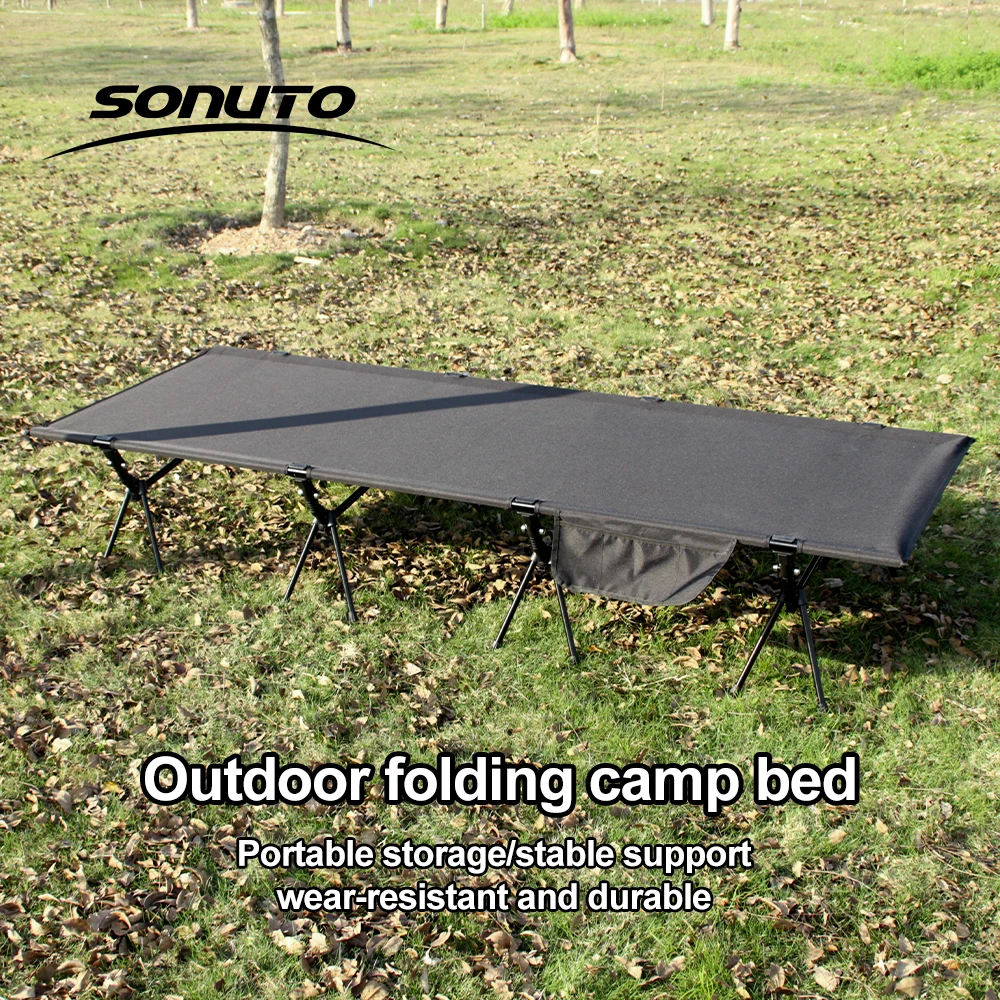
This model is advertised with dimensions of 210 x 80 cm (roughly 82 x 31 inches), making it long enough for taller users and wide enough to shift positions. The seller claims a total weight of 4 kg (about 8.8 lbs) and specifies a "600D Oxford" fabric. While 4 kg is relatively light for a cot this size, the listing does not state a maximum weight capacity. Before buying, ask the seller for the tested load limit and the packed dimensions to ensure it fits your storage space. The "Easy Setup" claim is also unverified; check if it uses a folding hinge system or requires assembling individual shock-corded poles.
The Budget Entry Point
Not everyone needs a premium sleep system for an occasional weekend trip.
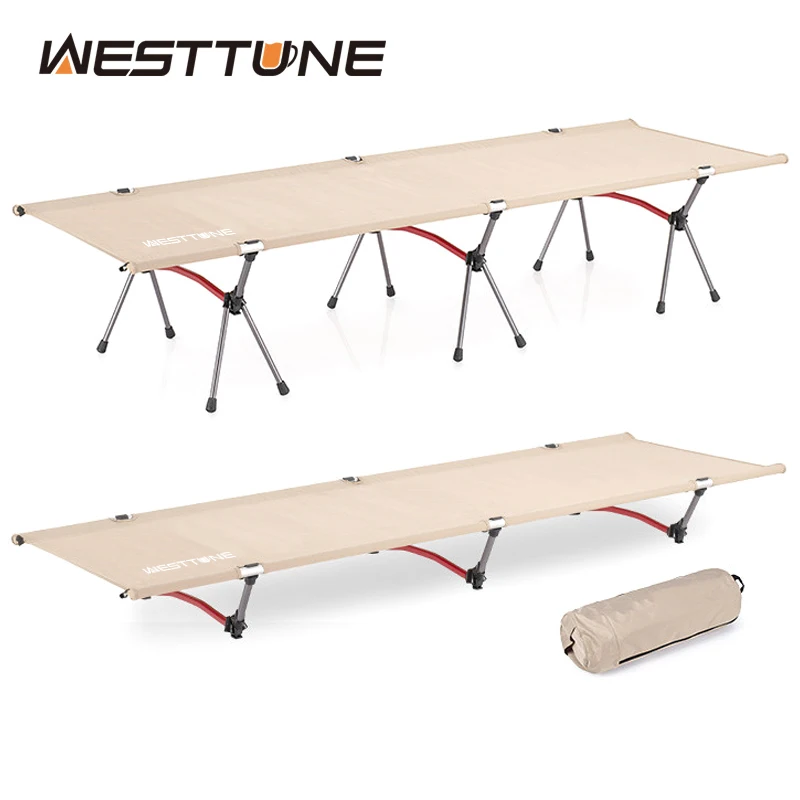
At a reference price of $16.59, this WESTTUNE listing represents the extreme budget end of the market. The title advertises an "Ultralight Aluminum Alloy" frame intended for backpacking and travel. However, the listing provides no visible specifications regarding dimensions, weight capacity, or packed size in the supplied data. At this price point, verifying the thickness of the aluminum tubing and the denier of the fabric with the seller is essential. It may serve as a basic, temporary solution, but treat the "ultralight" label as a marketing term until you have the actual weight in grams.
Narrow Profile for Small Tents
Fitting a cot inside a lightweight backpacking tent requires strict spatial awareness.
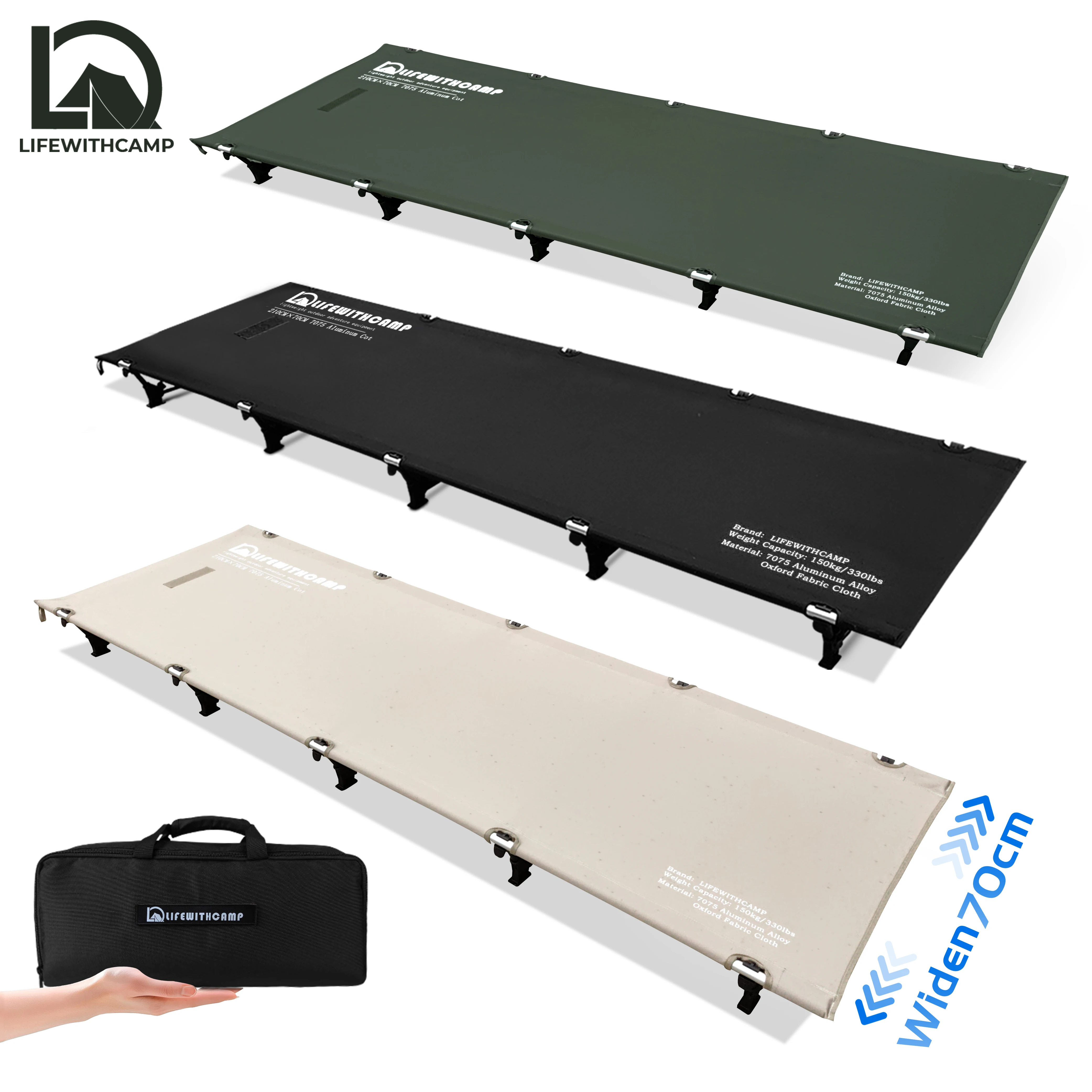
This option from Stone's Store advertises a 70 cm (about 27.5 inch) width, specifically targeting backpackers who need to fit their bed inside a narrow tent footprint. The listing emphasizes a compact, ultralight design for hiking. Because 70 cm is quite narrow, this cot is best suited for back sleepers or smaller-framed individuals. As with the other marketplace options, the exact length, height off the ground, and weight limit are not supplied here and must be verified with the seller to ensure it meets your physical requirements.
Check the Exact Size Variant
Match the dimensions and package contents to the option you intend to buy.
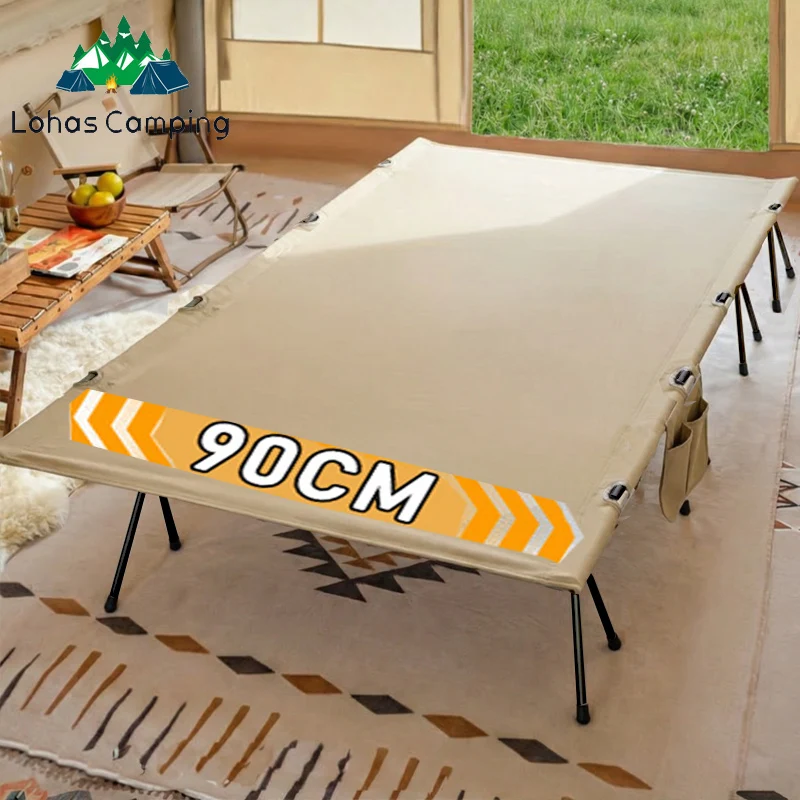
The Lohascamping listing title includes "High-Low Dual-Purpose" and widths of 90, 80, or 65 cm. These may describe separate purchasable variants; they do not establish that one cot can change width. Confirm the dimensions of your selected option, what "high-low" refers to, and which frame parts are included. Ask for the relevant setup instructions rather than inferring an adjustment mechanism from a list of sizes.
Integrated Shelter Systems
Sometimes the cot is just the foundation for a complete sleep system.

Also from Stone's Store, this listing advertises a single-person camping cot paired with a tent and mosquito net. This is a distinct category from standalone cots. Integrated bug shelters are highly practical for warm-weather camping where insects are the primary threat to sleep. However, combining a cot and a tent into one package often means compromising on the quality or size of both. Verify whether the mosquito net attaches securely to the cot frame and if the included cot shares the same dimensional limitations as the standalone models.
What Marketplace Listings Won't Tell You
When shopping for a camping cot based on online titles and brief descriptions, several critical factors remain hidden. Keep these questions ready when contacting a seller:
- What is the exact weight limit? "Sturdy" is subjective. Look for a stated capacity in pounds or kilograms. Independent reviews of established cots often highlight capacities ranging from 300 to 350 pounds for standard adult models (outdoorlife.com).
- What are the packed dimensions? A cot might weigh only 4 kg but fold into a rigid square that refuses to slide into a duffel bag.
- Does it require a separate pad? Suspended fabric breathes well in summer but offers zero insulation in cold weather. If you are camping in cooler temperatures, you will likely need to pair the cot with a camping mattress or insulated pad designed to fit its specific width.
- Will it puncture my tent floor? Metal feet on hard ground can grind through waterproof tent floors. Ask if the cot includes rubber foot pads or if you need to bring tennis balls or specialized covers to protect your shelter.
Making the Final Call
Your decision tree is straightforward. If you are parking at the campsite, prioritize width (80 cm / 31 inches or more), higher weight limits, and features like padding or adjustable legs. If you are carrying your gear on your back, prioritize packed size, aluminum frames, and accept that a narrower sleeping surface (65–70 cm) is the trade-off for mobility.
Treat every specification in a marketplace title as a claim requiring verification. An advertised "ultralight" tag means nothing without a gram count, and a "portable" label is useless if the folded dimensions exceed your pack's capacity. Match the verified numbers to your actual trip logistics, and the right cot will make the dirt feel a lot further away.